

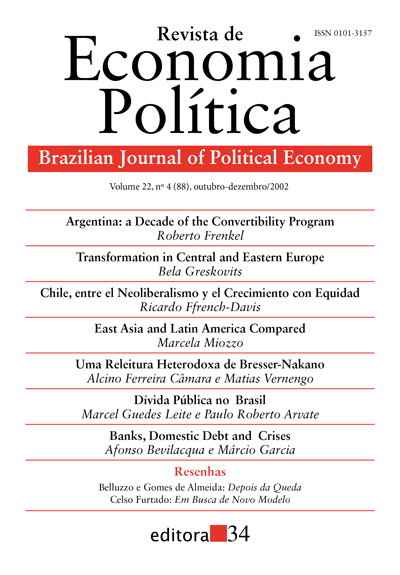
Argentina: a decade of the convertibility program
Article Sidebar
Main Article Content
Abstract
This article is an assessment of the Convertibility period in Argentina, which covered the nineties. It is presented in two sections. In the first section macroeconomic performance is described and evaluated, together with the effects on employment, unemployment and income distribution. An important contraction in full employment and significant increments in unemployment and involuntary underemployment are stressed. As from the mid-nineties, income distribution shows a strong worsening trend and the poverty and indigence indicators tend to rise. The increment in unemployment stands as the main explanatory factor of the worsening of social conditions. In the second section different aspects of the Convertibility Regime are discussed: the appreciated exchange rate, the dollarization of the financial system, the accentuated dependency on capital flows, the external sustainability and the regime durability.
JEL Classification: E31; E65.