
Inteligência Artificial como espelho organizacional
Barra lateral de artigos
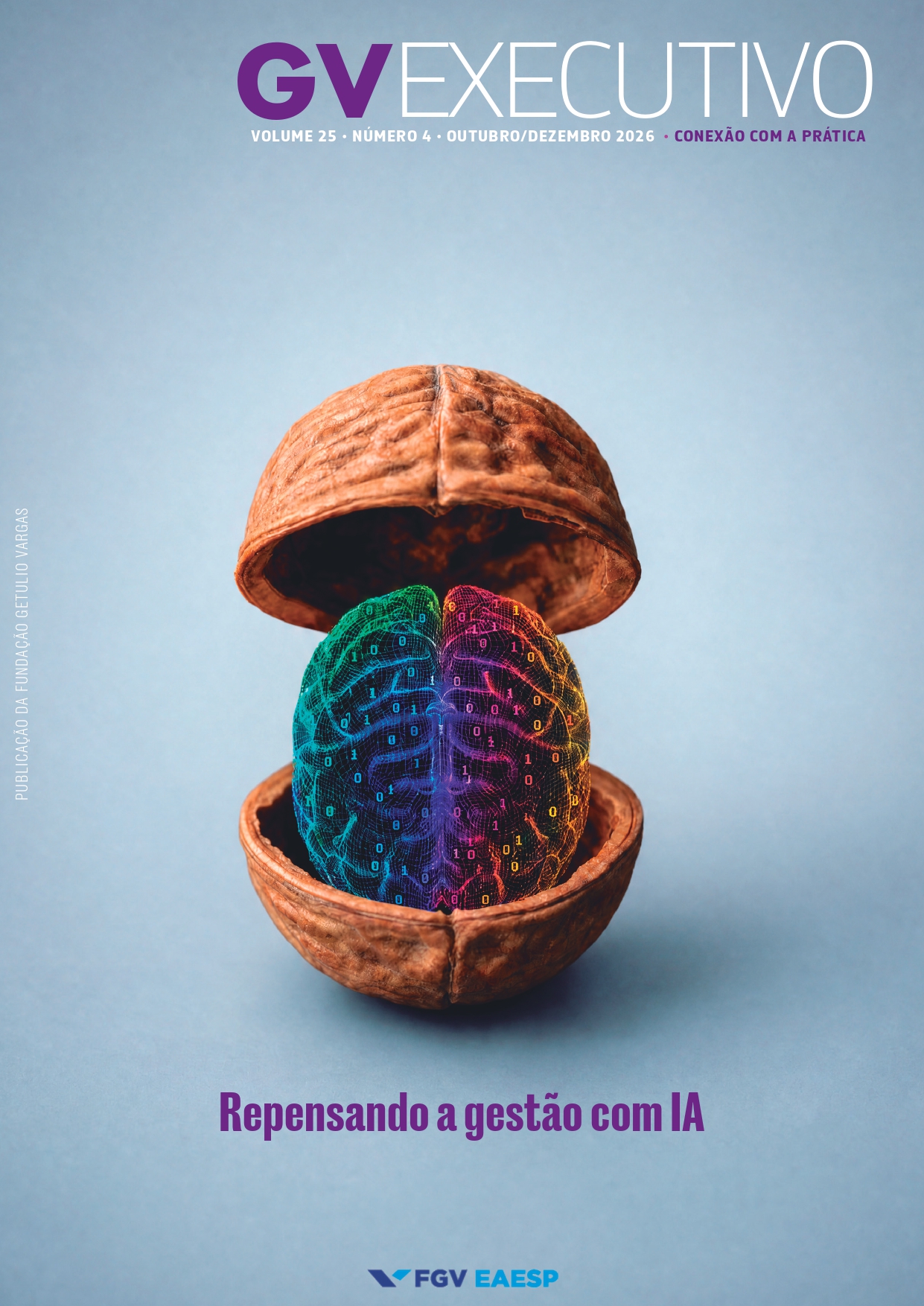
Conteúdo do artigo principal
Resumo
Objetivos: analisar por que a inteligência artificial (IA) deve ser compreendida não apenas como tecnologia de automação, mas como um espelho organizacional que torna visíveis incoerências estratégicas, ambiguidades decisórias e fragilidades de accountability.
Estado da arte: a literatura recente sobre IA e transformação digital mostra que a captura de valor depende menos da sofisticação técnica isolada e mais da integração entre dados, estratégia, governança, julgamento humano e aprendizagem organizacional.
Originalidade: o artigo desloca a pergunta executiva de “Como usar mais IA?” para “Que decisões a organização está disposta a tornar explícitas, auditáveis e passíveis de responsabilização?”.
Impactos: são propostos dilemas e recomendações para executivos, conselhos e lideranças que desejam transformar IA em capacidade decisória, e não apenas em portfólio de ferramentas.
ODS: 8 – Trabalho decente e crescimento econômico.
Downloads
Detalhes do artigo
Referências
Nawaz, N., Arunachalam, H., Pathi, B. K., & Gajenderan, V. (2024). The adoption of artificial intelligence in human resources management practices. International Journal of Information Management Data Insights, 4(1), art. 100208. https://doi.org/10.1016/j.jjimei.2023.100208; Tambe, P., Cappelli, P., & Yakubovich, V. (2019). Artificial intelligence in human resources management: Challenges and a path forward. California Management Review, 61(4), 15-42. https://doi.org/10.1177/0008125619867910
Furr, N., Ozcan, P., & Eisenhardt, K. M. (2022). What is digital transformation? Core tensions facing established companies on the global stage. Global Strategy Journal, 12(4), 595-618. https://doi.org/10.1002/gsj.1442; Teece, D. J. (2018). Business models and dynamic capabilities. Long Range Planning, 51(1), 40-49. https://doi.org/10.1016/j.lrp.2017.06.007
Teece, D. J., Pisano, G., & Shuen, A. (1997). Dynamic capabilities and strategic management. Strategic Management Journal, 18(7), 509-533. https://doi.org/10.1002/(SICI)1097-0266(199708)18:7<509::AID-SMJ882>3.0.CO;2-Z; Teece, D. J. (2007). Explicating dynamic capabilities: The nature and microfoundations of (sustainable) enterprise performance. Strategic Management Journal, 28(13), 1319-1350. https://doi.org/10.1002/smj.640
Lei n. 13.709, de 14 de agosto de 2018. (2018, agosto 15). Lei Geral de Proteção de Dados Pessoais. Brasília, DF.
MIT Sloan Management Review, & Boston Consulting Group. (2020). Expanding AI's impact with organizational learning. https://sloanreview.mit.edu/projects/expanding-ais-impact-with-organizational-learning
Teece, D. J. (2018). Business models and dynamic capabilities. Long Range Planning, 51(1), 40-49. https://doi.org/10.1016/j.lrp.2017.06.007
Teece, D. J. (2007). Explicating dynamic capabilities: The nature and microfoundations of (sustainable) enterprise performance. Strategic Management Journal, 28(13), 1319-1350. https://doi.org/10.1002/smj.640
Kahneman, D., Lovallo, D., & Sibony, O. (2011, junho). The big idea: Before you make that big decision. Harvard Business Review. https://hbr.org/2011/06/the-big-idea-before-you-make-that-big-decision
9.Teece, D. J., Pisano, G., & Shuen, A. (1997). Dynamic capabilities and strategic management. Strategic Management Journal, 18(7), 509-533. https://doi.org/10.1002/(SICI)1097-0266(199708)18:7<509::AID-SMJ882>3.0.CO;2-Z; Teece, D. J. (2007). Explicating dynamic capabilities: The nature and microfoundations of (sustainable) enterprise performance. Strategic Management Journal, 28(13), 1319-1350. https://doi.org/10.1002/smj.640
Simon, H. A. (1997). Administrative behavior: A study of decision-making processes in administrative organizations (4a ed.). Free Press.
Chowdhury, S., Dey, P., Joel-Edgar, S., Bhattacharya, S., Rodriguez-Espindola, O., Abadie, A., & Truong, L. (2023). Unlocking the value of artificial intelligence in human resource management through AI capability framework. Human Resource Management Review, 33(1), art. 100899. https://doi.org/10.1016/j.hrmr.2022.100899; Budhwar, P., Chowdhury, S., & Wood, G., Aguinis, H., Bamber, G., Beltran, J., Boselie, P., Lee Cooke, F., Decker, S., Denisi, A., Dey, P., Guest, D., Knoblich, A., Malik, A., Paauwe, J., Papagiannidis, S., Patel, C., Pereira, V., Ren, S., Rogelberg, S., Saunders, M., Tung, R., Paluch, R., Varma, A. (2023). Human resource management in the age of generative artificial intelligence: perspectives and research directions on ChatGPT. Human Resource Management Journal, 33(3), 606-659. https://doi.org/10.1111/1748-8583.12524; Tambe, P., Cappelli, P., & Yakubovich, V. (2019). Artificial intelligence in human resources management: Challenges and a path forward. California Management Review, 61(4), 15-42. https://doi.org/10.1177/0008125619867910
Bankins, S., Formosa, P., Griep, Y., & Richards, D. (2022). AI decision making with dignity? Contrasting workers’ justice perceptions of human and AI decision making in a human resource management context. Information Systems Frontiers, 24(3), 857-875. https://doi.org/10.1007/s10796-021-10223-8; Booyse, D., & Scheepers, C. B. (2024). Barriers to adopting automated organisational decision-making through the use of artificial intelligence. Management Research Review, 47(1), 64-85. https://doi.org/10.1108/MRR-09-2021-0701
Teece, D. J., Pisano, G., & Shuen, A. (1997). Dynamic capabilities and strategic management. Strategic Management Journal, 18(7), 509-533. https://doi.org/10.1002/(SICI)1097-0266(199708)18:7<509::AID-SMJ882>3.0.CO;2-Z; Teece, D. J. (2007). Explicating dynamic capabilities: The nature and microfoundations of (sustainable) enterprise performance. Strategic Management Journal, 28(13), 1319-1350. https://doi.org/10.1002/smj.640
Warner, K. S. R., & Wäger, M. (2019). Building dynamic capabilities for digital transformation: An ongoing process of strategic renewal. Long Range Planning, 52(3), 326-349. https://doi.org/10.1016/j.lrp.2018.12.001